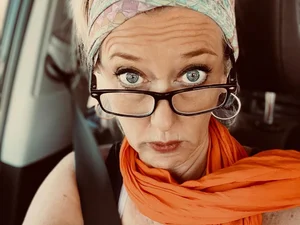
Thankful
I’ve been in another depressive phase. It arrived quietly, with winter, seeping into my bones, filling the spaces between thought and movement. It happens every year, this slow tide that settles in the marrow. And every year, I convince myself that I am fine. But winter fine is never fine. It is isolation, silence, a gray hum behind the eyes that never fully fades. Sleep comes, but it does not heal. Days pass as ghosts of themselves, and I move through the world as a shadow of who I once was, trapped behind glass, reaching for a life I cannot touch. I do what is necessary to survive and call it enough, though it never is.
I wait. For the light to return. For my mind to wake from its leaden stupor. For my body to remember how it feels to float instead of sink. I wait for noise to soften, for the weight pressing me down to lift, even for a moment. I know this cycle intimately, have lived it for decades. Each recurrence feels like a trap, a tide that may not recede. And yet, slowly, light begins to pierce. It lingers longer across the floorboards, a delicate persistence that reaches into the rooms of my mind. Shadows thin. The cold edges of the world soften. A sliver of movement becomes possible, getting out of bed, brewing coffee, letting water run over my skin. Movement once simple is reclaimed slowly, step by careful step.
It is never immediate. The depression loosens its grip only incrementally. I climb, inch by inch, onto solid ground as if I’ve been lost at sea. Even so, the shadows remain. I breathe, hesitant, and feel air on my face as if for the first time. I remember being alive. And in those moments, gratitude enters. The warmth of the sun on my skin. The hush in a friend’s voice. The scent of coffee that always reminds me I am here. The sound of laughter after months of silence. The world is harsh, chaotic, unforgiving, but it is also real. And I am still in it.
It is during one of these fragile returns that I found myself pulled back into the past. Digital files from the ICU, a hospitalization that has hovered in memory like an uninvited shadow, lay open on the screen before me. I had meant only to check recent MRI scans, to track the rebellion of a body worn by years of pain and neglect. But the past waits, patient and unyielding, in the glow of the monitor. The records stretch back to 2010, to the night when I consumed more than my body could endure, to the two days I spent in a coma, the four in critical care. My lungs full of tubes, my blood routed through machines, my kidneys failing. My body, precise in its suffering, keeping an immaculate record of collapse.
The documents are cold and clinical. They do not soften the terror, the disorientation, the sensation of being adrift in a body that is not mine. My name anchors every note, every line. Bold, undeniable, tethered to the slow unspooling of my existence. I read as if the story is someone else’s, but it is mine. I am appalled by the clarity of it, the brutality of the recording. My unraveling was not a sudden event; it was deliberate, precise, a slow-motion wreck. Perhaps that is always how it is, with the human body and mind when they are pushed to extremity.
Scrolling, I encounter entries that document the sharpness of each intervention, the speed of hands and needles, the searing pain of a needle sinking into skin, each detail listed as though it is a routine observation, rather than the collapse of a person’s life. The words twist my stomach. I cannot hold them all at once. The shock, the grief, the raw astonishment that I am still here presses against my chest. My body survived when I could not fight for it. It breathed for me, pushed for me, pulled me back when I was willing to slip away.
There is terror in remembering, in recognizing the depths to which a mind can sink. Chemical chaos, trauma tangled with illness, moments when reason retreats and primal survival takes over. I shudder at the thought of that person I once was, at anyone who has known that suffocating edge. And yet, within that terror, there is gratitude, immense and almost holy. I am still here. Still breathing. Still able to feel the warmth of sun on skin, the weight of a book in my hands, the echo of laughter. Survival itself becomes a meditation, a prayer, a reclamation.
I press my hands to my skin, tracing the pulse beneath. I whisper apologies to the hollow places left by pain. I have spent years resenting this body, punishing it, cursing it for failure. Now I acknowledge its resilience. I owe it tenderness, love, recognition. Life is precious in a way that cannot be taught by those who have not faced its absence. I have seen the abyss, and something, whether science, fate, or stubbornness, pulled me back. I wake now to more moments: more sunlight, more art, more love, more pain. Pain that proves I am here, still existing, still alive.
The depression I live with, the ICU memory, the long shadow of trauma, exist side by side. One does not erase the other. The depressive phases are tides, slow and inexorable, and the ICU was a rupture, a stark confrontation with mortality. Both demand reckoning. Both have taught me the rhythms of survival. The daily slog through gray, the meticulous attention to breath and limb, the slow building of light within darkness. All of it is evidence that I am capable of persistence. That even broken systems, brain, body, mind, can endure.
I reflect on the cyclical nature of depression. Its familiarity allows for recognition, a cautious hope, even as it drags me under each time. I notice how the smallest details, the angle of sunlight through blinds, the softness of a friend’s voice, the aroma of coffee, become monumental, markers of a world that still exists outside my internal grayness. These micro-moments are salvations, as crucial as any medicine, any intervention. They are proof that survival is not passive. It is active. It is noticing. It is care. It is art.
Art has been my lifeline, my thread through the chaos. During periods of illness, whether mental or physical, I have turned to process as therapy. I layer paint, scratch paper, write and re-write fragments of myself into journals that track the scattered pieces of identity. Making allows me to breathe when my lungs cannot, to speak when my voice fails. In the ICU, I could not make, could not move, could barely command breath. Now, in these phases of depression, creating is a way to inhabit life again, to map out my presence. The act itself asserts survival.
I also reflect on family, on the intricate web of relationships that both sustain and fracture me. Depression isolates. Illness exposes dependence and vulnerability. In my lowest moments, I feel the distance from those I love most, the impossibility of explaining the internal mechanics of despair. Yet glimpses of connection, my partner’s hand on mine, a child’s laugh, a friend’s unexpected check-in, anchor me in the present, tether me to living. I learn to recognize that these moments, fragile and fleeting, are enough to keep going. They are enough to keep breathing.
Memory itself is unreliable, and yet I rely on it to reconstruct myself. The ICU files remind me that I once teetered at the edge, and depression reminds me that the edge is always near. These two truths converge: mortality, fragility, survival. They teach me patience with myself, acceptance of limits, and the necessity of vigilance over my mind. Both also remind me of the preciousness of the ordinary, the comfort of a hot shower, the weight of a familiar book, the taste of coffee, the sunlight creeping across the floor. These simple things are proof of continuity, of existence, of life not just endured but witnessed.
There is a rhythm to this life. The depressive phases, the surges of clarity, the slow climbing back to activity, the quiet reclamation of bodily autonomy. They create a cadence that is mine alone. Each breath, each small decision to move, to engage, to see, to touch, is a part of survival and a part of art. The hospital files are a reminder of fragility. Depression is a reminder of persistence. Together they are a testament to fragility and persistence.
The awareness that I am still here is profound. I do not take it lightly. The breath that fills my lungs, the pulse beneath my hands, the sunlight across the floorboards, the distant echo of voices I love, these are all tiny triumphs. Each moment of engagement with the world, each decision to step out of bed, to make coffee, to feel, to write, to move, is a conscious acknowledgment of life reclaimed. I am witness to my survival. I am participant in it. I am architect of the fragile bridge between darkness and light.
I know now that survival is not linear. The ICU proved that. Depression proves that. Recovery proves that. Both show that life is never tidy, never predictable, never guaranteed. And yet, each day I wake, I add something to the ledger of existence. Each breath, each small act of attention, is a deposit in the ongoing proof that I am still here. That I am still capable of feeling, of creating, of loving, of enduring.
The body, the mind, the memory, the art, the human connections, form a lattice of resilience. The ICU documents are cold and indifferent, but they are also confirmation. Confirmation that something in me, whether biology or stubbornness or sheer force of will, kept me alive. The depression that returns cyclically is a shadow I have learned to navigate, a tide I have learned to survive. Together they are proof that the broken can endure.
I write these words to remember, to bear witness, to claim the life that is mine. I write to mark the moments I might otherwise forget, to trace the path from winter gray to sunlight, from ICU bed to living body, from despair to awareness, from fracture to continuity. I write because survival is not just breathing. It is recording, reflecting, acknowledging, feeling. Writing is the act of being present, of declaring existence, of reclaiming self from the shadows of illness, memory, and fear.
I close the files. I feel the pulse beneath my hands. I hear the wind outside. I taste coffee on my tongue. I notice light on the walls, small movements of the day, evidence that life continues. I have survived. I am surviving. I will continue to survive. And in that recognition, I find the quiet insistence of hope, unshaken and unyielding, that even the broken can endure.