The I Am I Am I Am project is a journey of self-discovery and artistic reflection. Rooted in the profound simplicity of the phrase “I am,” it explores the layers of identity shaped by a lifetime of creative work, personal history, and psychiatric experience. By revisiting past artwork, unearthing old writing, and reckoning with a complex medical story, this project seeks to weave together the fragments of an evolving self. At its core, it is an exploration of presence, resilience, and the unbroken thread of being that persists through both triumph and struggle.
“I am” is more than a statement of existence—it is an invitation to be curious about what it truly means to live. This project is not about creating a polished narrative of my life but about embracing the messiness, the contradictions, and the questions that remain unresolved. It is about finding continuity in a life that has often felt fractured, about honoring both the moments of transformation and the unnoticed spaces in between—those quiet intervals where being itself is enough.
As I move through this work, I return again and again to the power of storytelling—not only the stories we share with others but the ones we carry within ourselves. Who am I without roles, labels, or expectations? Who am I in my art, my words, my memories? Who am I in the stillness of simply existing? I Am I Am I Am is not just a project; it is a practice of presence, a commitment to living fully and authentically. No matter where I have been or where I am going, I remain: I am.
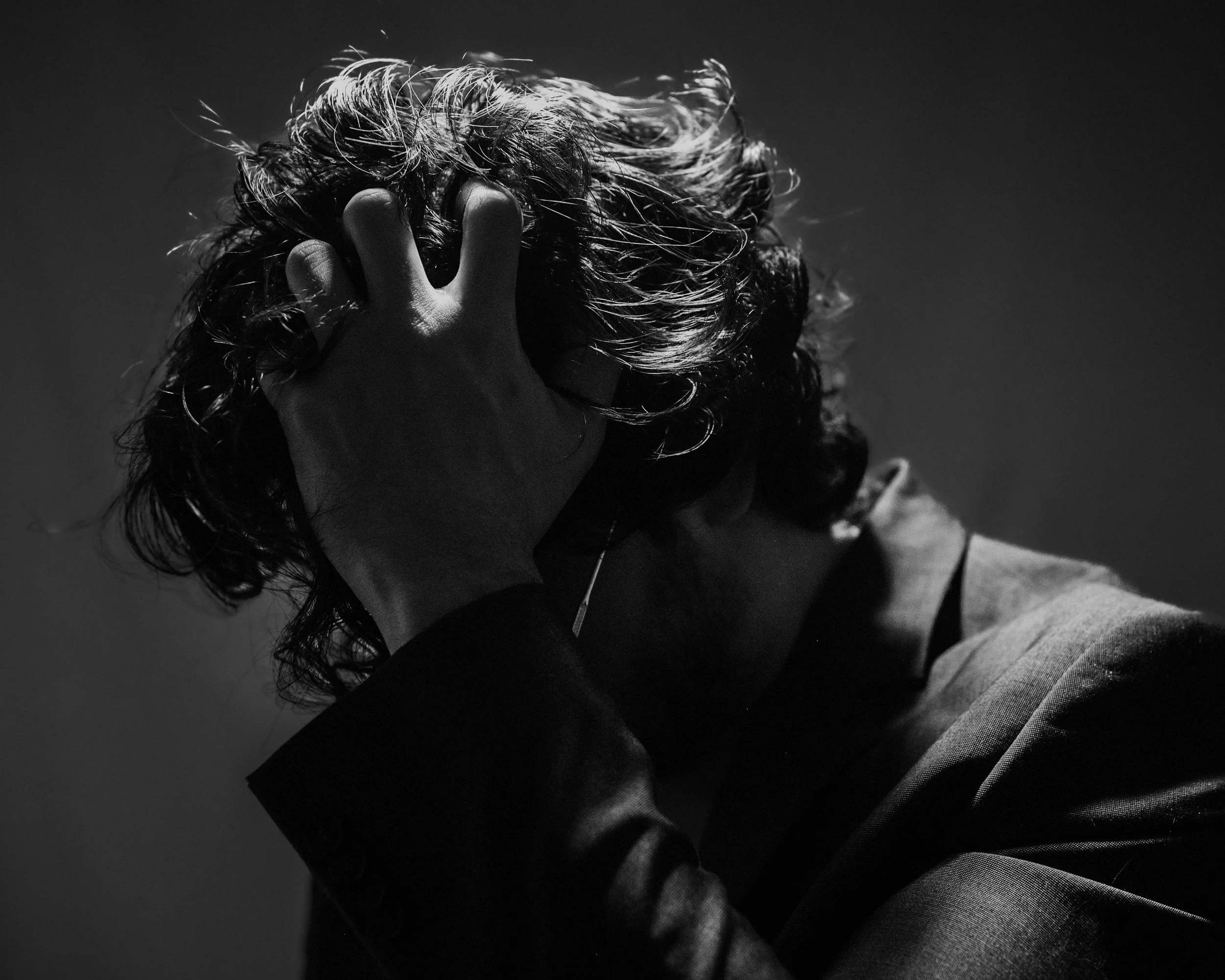
The descent into depression is not predictable. It begins the way an undertow begins, quietly, beneath a surface that looks almost inviting. There is no marker, no visible warning. Only the sense that the water has changed temperature around your ankles.
So yes, the room is dark. And I don’t like the dark. It makes everything worse. It makes my thoughts louder. My chest tighter. I don’t trust the dark. It’s where the sad things grow. And I guess that’s what this is. Sadness. Or sickness. Or both. I don’t know anymore.
She cleaned compulsively, paced, whispered, and corrected details no one else noticed. Floors were rewetted and polished. Objects aligned, realigned. Her mind circled endlessly, inventing betrayals, neglect, and slights. The rituals never calmed her. They only prolonged the sense that something remained unfinished.
The house I lived in was not made of wood or stone. It was built from expectation and inheritance, from silence arranged as order, from rituals passed down like furniture no one ever questioned.
I was not trying to solve anything. I was trying to feel without editing. The body knows before the mind does. Art gave me a way to listen.
We often speak about leadership in terms of resilience, output, and strategy. Rarely do we speak about wholeness. Yet no one can pour from an empty nervous system. No one can outrun biology with ambition.
Speech contorts. Lies dress themselves as truth. Truth folds in on itself. Every day, we encounter people speaking in contradictions, in promises that are nothing, and in our own lives, consequences spiral, rules twist, and forces pull us along that we cannot name or resist.
We once moved together like three points in orbit. Time shifted the gravity, distance grew, and I learned that love does not mean holding on.
The house became a series of invisible rules that were enforced by the mother’s gaze, a gaze that often fell elsewhere, distracted by the constant stream of dangers she imagined.
I AM. I AM. I AM. Project is a way of understanding who I am when no one else is in the room. The project is a personal excavation. A return to honesty after years of speaking in borrowed language.
I knew, eventually, that if I were to be true to myself, I had to see it through. Not because anyone was waiting, not because there was a promise of recognition or even understanding. Simply because the work needed to exist, even if its audience was only me.
Grief pressed in long before I had a name for it. It lived in quiet rooms and in shadows that lingered even when light broke through. It was relentless.
Post-Traumatic Stress Disorder (PTSD) stands as a haunting testament to the mind’s fragile architecture, a profound disruption where the normal rhythms of memory and time splinter beneath the crushing weight of trauma.

A personal memoir exploring trauma, depression, and survival. From the first encounter with darkness at eighteen to decades of therapy, this essay traces the enduring impact of assault, self-reflection, and the daily work of living under the weight of mental illness.