Daily Meditation for October 26
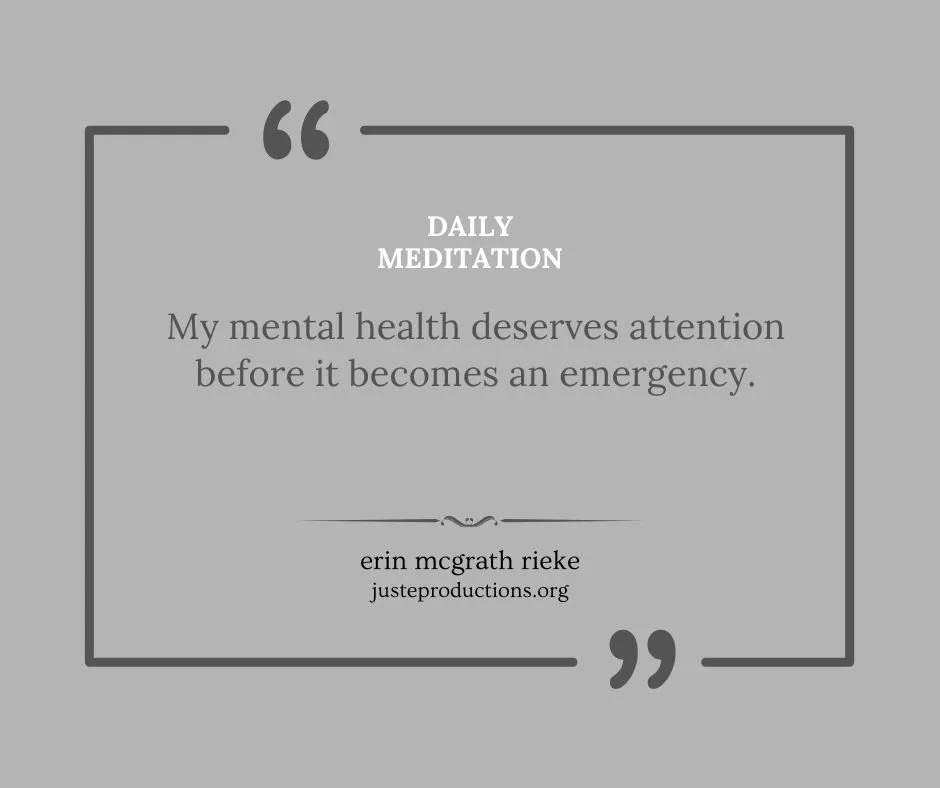
My mental health deserves attention before it becomes an emergency.
REFLECTION
We are often remarkably attentive to the needs of others while overlooking the quiet signals that something within us requires care. We notice when someone seems withdrawn, unusually tired, or overwhelmed, yet we may dismiss those same changes in ourselves as temporary inconveniences.
Perhaps we have become accustomed to functioning through exhaustion. We explain away disrupted sleep, persistent worry, irritability, or the gradual disappearance of activities we once enjoyed. We convince ourselves that we will address these things when life becomes less demanding, when our responsibilities diminish, or when the discomfort becomes impossible to ignore.
But mental health does not deserve our attention only when we reach a breaking point.
Just as we care for our physical health through ordinary habits, preventive appointments, and attention to changing symptoms, our psychological well-being benefits from consistent consideration. Sometimes that means recognizing when we need rest. Sometimes it means reaching out to someone we trust, reconsidering an obligation, or seeking professional support before circumstances become more difficult.
There is no achievement in waiting until we are overwhelmed to acknowledge that something needs attention.
Today, consider the subtle ways your mind and body communicate their needs. What might change if you responded to those signals with the same compassion and seriousness you would offer someone you love?
WRITE
Think about the early signs that tell you your mental or emotional well-being may need additional attention.
Do you notice changes in your sleep, energy, concentration, appetite, relationships, or ability to enjoy familiar activities? Are there particular thoughts or behaviors that tend to emerge when you are becoming overwhelmed?
Write about three signals you would like to recognize more consistently.
Beside each one, identify a small, realistic response that might help you care for yourself before the difficulty intensifies.
Consider who you can turn to when you need support and what makes asking for help easier or more difficult.
CREATE
Take a blank piece of paper and divide it into three sections labeled Notice, Nurture, and Support.
Under Notice, use colors, symbols, or words to represent the emotional and physical signals that tell you something needs attention.
Under Nurture, illustrate the activities, environments, or practices that help you feel more grounded and connected.
Under Support, represent the people, relationships, and resources available when caring for yourself requires assistance.
Allow the composition to become a personal reminder that well-being is supported through awareness, everyday care, and connection with others.
Keep it somewhere accessible as a reference you can return to when needed.
LISTEN
Choose a piece of music that you associate with comfort, familiarity, or emotional safety.
Find a quiet place and listen without attempting to accomplish anything else.
Notice your physical and emotional responses. Are your thoughts moving quickly? Do you feel restless, tired, distracted, or relaxed? Does the music bring forward an emotion you had not recognized earlier?
There is no need to change what you experience or arrive at a particular state of mind.
Allow the listening exercise to become an opportunity to observe yourself with curiosity rather than judgment.
When the music ends, ask yourself what you might need today.
SHARE
If you feel comfortable, share a photograph, piece of writing, artwork, or reflection inspired by today's meditation. You do not need to disclose a diagnosis, personal history, or private circumstances to participate.
What is one small way you can begin giving your mental health the attention it deserves before you feel overwhelmed?
Sometimes caring for ourselves begins with the simple recognition that we are worthy of attention long before we reach a crisis.